
Cotton vs muslin kurta sets can feel quite different because muslin has a looser weave than regular cotton. If you want a kurta set you can wear often, start by deciding whether you value a lighter feel or easier routine care more. The right choice depends on your daily plans, your comfort, and the time you can give garment care.
Indian weather varies by region and season, so a set that feels good in one place may not suit every day elsewhere. You may also want one outfit for regular wear and another for special plans. Neither fabric is best for every wardrobe. This comparison helps you choose with your real routine in mind, not just a fabric label.
Key Takeaways
- Choose cotton for a more opaque, structured look.
- Choose muslin when a light feel and airflow matter most.
- Think about how often you will wear and wash each set.
- Check lining and coverage when you want more opacity.
- Choose a set that fills a real need in your wardrobe.
Your best choice is the fabric that fits the way you dress and care for clothes.
Cotton vs Muslin Kurta Sets: Which Should You Choose?
Choose cotton for a more opaque, structured look, or muslin for a light feel and more airflow. Lightness is the clearest reason to choose muslin, while cotton offers a broader range of weights. For a more covered look, cotton is the practical default.
Muslin is a type of cotton fabric with a looser weave than regular cotton, which is often tightly woven or knitted. Muslin is described as more breathable than most cotton types. Cotton can range from moderately to highly breathable, depending on its fabric.
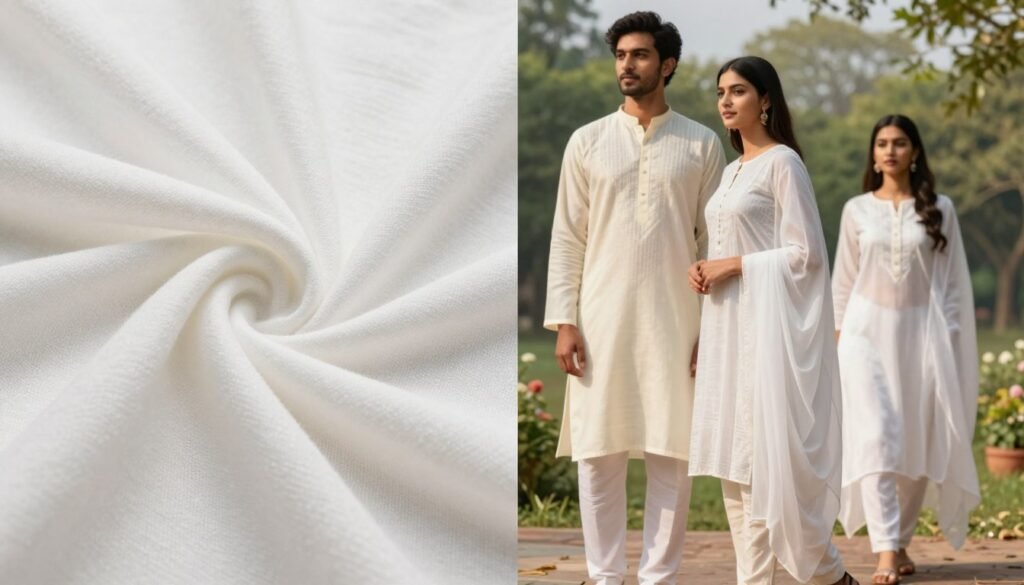
| Attribute | Cotton | Muslin |
|---|---|---|
| Weave | Often tightly woven or knitted | Looser weave |
| Breathability | Moderate to high | More breathable than most cotton types |
| Weight | Lightweight to heavy | Lightweight |
| Opacity | Generally opaque | Often semi-sheer |
If you need one default for a more covered look, choose cotton; if lightness is your priority, choose muslin.
GSM means grams per square metre, a measure of fabric weight per area. That number can help you compare fabric weight, but it does not replace checking the finished set.
Cotton kurta sets may suit you if you want a firmer shape and less see-through fabric. Muslin kurta sets suit you if you favor airflow and a lighter drape. The fabric name alone does not tell you the exact feel of every garment.
Look at the specific cut as well as the fabric. A roomy kurta and loose pants may feel different from a close-fitting set in the same material.
If you need one default for a more covered look, choose cotton; if lightness is your priority, choose muslin.
How Comfortable Are Cotton and Muslin in India’s Climate?
In warm, humid weather, a less layered silhouette can feel more comfortable than a heavily covered one. Fewer layers can help you feel less weighed down during a hot day. The cut and the layers matter alongside the fabric.
India has regions with different seasonal conditions, so the same outfit can feel different across climates. Your comfort also depends on where you spend the day and whether you move between outdoor heat and indoor spaces.
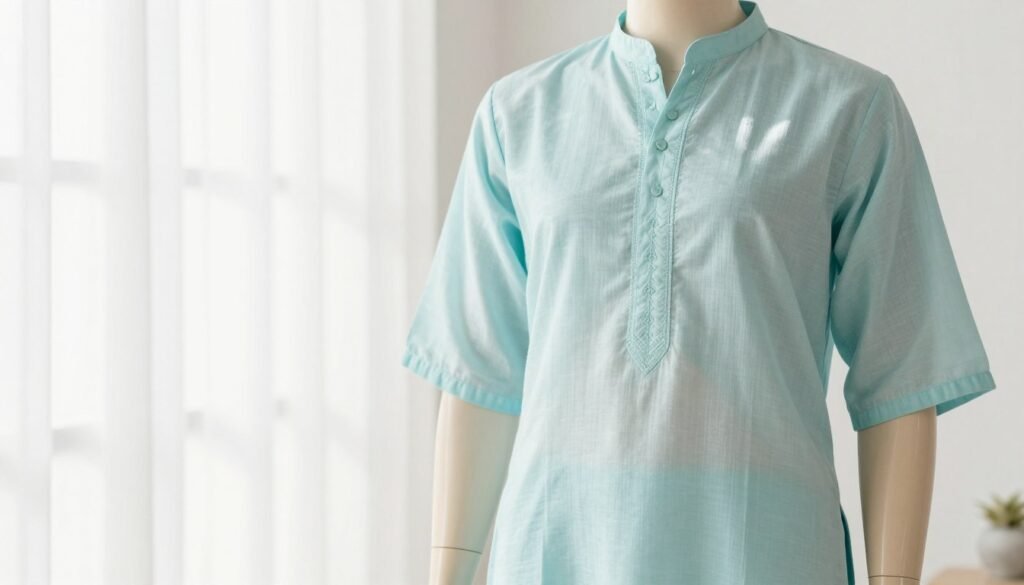
Breathability on warm days
For warm days, choose a silhouette that does not add layers you do not need. A kurta with room to move can feel less restrictive than one worn with several extra pieces.
Breathable clothing is useful when the air feels warm and damp, but the set still needs to suit your plans. A long, covered outfit may feel different in direct sun than it does in a shaded room.
Think about how much of the day you will spend outside. A simple set can be easier to wear through errands, while an added dupatta may suit a place where you want more coverage.
Coverage, lining, and comfort
A neckline changes how much of your upper chest and neck the kurta covers. Sleeves also affect coverage, from short sleeves to longer ones that cover more of your arms.
Lining adds another layer beneath the outer fabric. It can change how covered the garment feels and how much layering you need underneath. Check how the lining sits rather than assuming every lined set feels the same.
On a hot day in India, you may prefer fewer layers and a cut that lets you move easily. On a cooler evening, sleeves or a light extra layer may feel more comfortable.
Your plans can change during the day, especially when you travel between warm outdoor areas and cooler indoor places. A set that allows comfortable movement gives you more room to adapt without adding many layers.
Consider the amount of coverage you want before choosing a neckline or sleeve length. A neckline you like in a photo may feel different when worn through a full day.
On a cooler evening, a light extra layer can add comfort without changing the set you chose for the day.
Which Fabric Holds Up Better to Frequent Wear?
If you expect to wash a set often, cotton is generally the more durable choice. Frequent washing is harder on muslin, whose loose weave needs gentler handling. Cotton usually suits a frequent-wash routine better.
Cotton is described as more durable for frequent washing. Muslin’s loose weave makes it more delicate and more likely to wear thin with heavy washing. That difference matters when you plan to wear one set often.
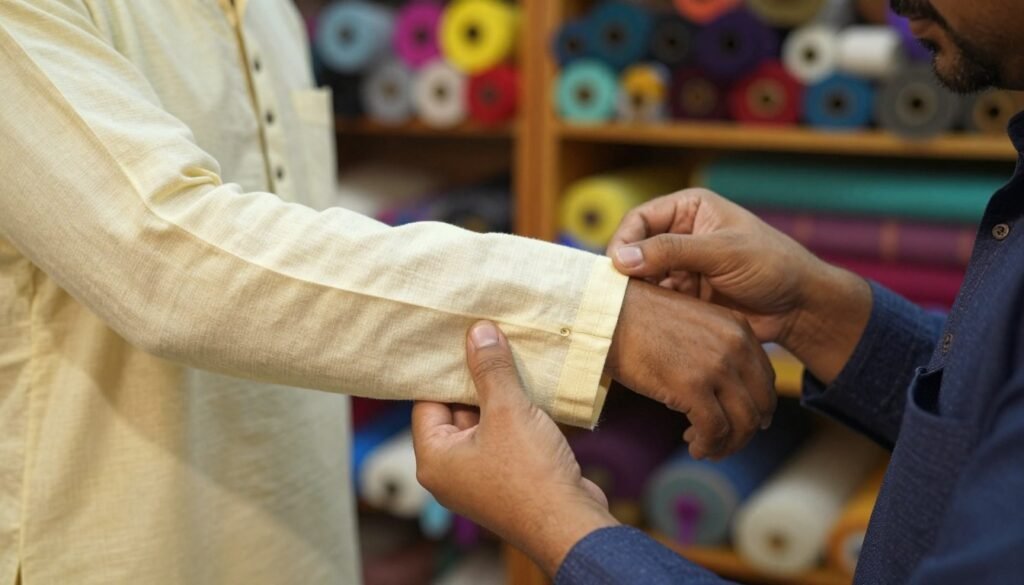
Friction affects areas that rub against your body or other surfaces. Cuffs, elbows, and underarms can wear sooner than parts of the garment that move less.
Look at these spots after regular use, especially if the set feels thinner or shows small changes in texture. A weak area can grow more noticeable with repeated wear, even when the rest of the garment still looks sound.
Muslin can still work well for occasional, careful wear. Its delicate nature does not rule it out when you have a less frequent use in mind.
Think about how the set will fit into your routine before choosing it as a daily favorite. A garment worn less often may face less rubbing and washing than one used several times each week.
Fabric durability matters most when you expect repeated wear and washing from the same set. Check high-friction areas for early thinning before making a frequently worn set part of your regular rotation.
How Should You Wash and Care for Each Fabric?
A gentle routine is the safest starting point for both fabrics, with muslin calling for the more delicate wash method. Gentle handling helps limit rough wear during washing. Use cold water and mild detergent for cotton as practical care guidance.
Care depends on the garment, so read its own instructions before washing. For cotton, gentle washing in cold water with mild detergent can help avoid shrinkage and maintain softness.
Washing without rough handling
| Care task | Cotton | Muslin |
|---|---|---|
| Washing method | Gentle wash | Gentle hand wash or dry cleaning |
| Water approach | Cold water | Gentle handling with cool water |
| Detergent approach | Mild detergent | Mild detergent for hand washing |
Cold water and mild detergent can help reduce the risk of shrinkage in cotton, but they cannot promise that shrinkage will never happen. Keep the wash gentle rather than rubbing or twisting the fabric.
For muslin, gentle hand washing or dry cleaning is the cautious route. A loose weave can catch or stretch if you handle it roughly, so avoid forceful scrubbing.
When a set has trim or more than one fabric, follow its care label. A gentler method can help protect details that may not respond like the main fabric.
Drying and storing the sets
After washing, handle the garment carefully as you move it to dry. Avoid pulling at a loose weave or catching it on sharp edges.
Let the set dry fully before putting it away. Damp fabric stored in a closed space can trap moisture and leave the garment feeling musty.
Store the pants and kurta where they can stay dry and avoid snagging against rough items. Fold them without pressing hard on delicate details.
Some garments may need extra care because of their finish or attached pieces. Follow the label when it gives a specific drying or cleaning method.
A simple kurta care routine can make it easier to keep the set ready for its next wear. Let each set dry fully before storing it to reduce the chance of trapped dampness.
Which Kurta Set Styles Suit Work, Casual Wear, and Occasions?
For work or frequent daytime wear, a simpler cut is usually easier to style repeatedly. Simple details can make an outfit feel suitable for more than one day. Choose a level of decoration that fits where you plan to wear the set.
A two-piece kurta set pairs a kurta with pants. A three-piece set adds a dupatta, giving you another piece to wear when you want more coverage or a different look.
For work and repeat wear
A plain or lightly decorated kurta can be easier to wear again in a work setting. Clean lines and restrained details make it simple to pair with familiar accessories.
For repeat wear, think about what you already reach for on busy mornings. A set that works with the shoes and bags you use most may be easier to wear often.
Work settings differ, so match the amount of coverage and decoration to your workplace. The same set may suit a relaxed office but feel too casual for a more formal event.
For relaxed days and dressier plans
For everyday errands, comfort and ease of movement may matter more than extra detail. A relaxed cut can work well when you want to spend the day moving between tasks.
Social plans can call for a little more color or decoration. Festive or dressier occasions may suit embroidery, prints, or a dupatta that changes the feel of the outfit.
- Office or work
- Everyday errands
- Relaxed social plans
- Festive or dressier occasions
A kurta set does not need to cover every kind of plan. You can keep one outfit simple for regular wear and choose more detail for less frequent events.
Look at the setting before adding extra pieces or accessories. A detailed set can feel out of place in a setting that calls for a quieter look.
Choose the level of decoration to suit the setting, rather than assuming every kurta set has to serve every occasion.
What Construction Details Should You Check in a Kurta Set?
Check how the kurta and pants are finished, not just the fabric name on the label. Good fit depends on details such as seams, lining, and the way the pants sit. Construction can change how a set feels when you move.
A set may include two pieces, a kurta and pants, or three pieces with a dupatta. Check which pieces come with the garment before deciding whether it meets your needs.
The Onewe Sky Blue Floral Embroidered Muslin Kurta Set with Pants uses muslin for both the kurta and pants. It has an attached inner lining, a useful detail to note when comparing lined sets.
- Seams: Look for even stitching and any loose threads.
- Lining: Check whether it is attached and where it covers.
- Pants fit: Note the waist, rise, and room through the legs.
- Worn fit: Check how the kurta falls at the shoulders and hem.
A lined garment can feel different from an unlined one, even when both use muslin. Check whether the lining moves comfortably with the outer fabric.
Look at the pants as part of the full set, not as an afterthought. A comfortable kurta cannot make up for pants that pull or limit your steps.
Try sitting and walking in the set to confirm the pants and kurta feel comfortable in motion.
What Do Cotton and Muslin Kurta Sets Cost in India?
Ready-made set listings and fabric sold by the meter have different price bases, so compare like with like. Finished sets come with garments, while fabric listings price material by length. A per-meter fabric price is not the price of a ready-made set.
Heritage lists muslin kurta and suit sets at sale prices from ₹2,247.50 to ₹4,695.00. Onewe lists its Sky Blue Floral Embroidered Muslin Kurta Set with Pants at ₹4,590.00, reduced from ₹5,400.00.
| Listing | Format | Listed price | Order or price condition |
|---|---|---|---|
| Heritage muslin kurta and suit sets | Ready-made sets | ₹2,247.50 to ₹4,695.00 | Sale prices |
| Onewe Sky Blue Floral Embroidered Muslin Kurta Set with Pants | Ready-made set | ₹4,590.00 | Regular price ₹5,400.00 |
| 50GSM muslin silk fabric | Fabric by the meter | Rs 55 per meter | Minimum order quantity 100 Meter |
| 90GSM plain cotton muslin fabric | Fabric by the meter | Rs 53 per meter | Minimum order quantity 20 Meter |
The listed fabric prices apply to material by the meter, not finished clothes. Both fabric listings also set a minimum order quantity, which may not suit someone seeking one outfit.
Compare a ready-made set with another ready-made set, and fabric with fabric. The numbers can look close while describing different things, such as a complete garment or a length of cloth.
Heritage’s listed sale range covers muslin kurta and suit sets, while the Onewe listing describes one named set. The table keeps those formats separate so you can judge each price in context.
Before comparing prices, confirm whether the amount is for a finished set or fabric sold by the meter.
How Do GSM and Weave Density Affect Muslin?
GSM gives you a weight measure, but it does not by itself tell you how a finished kurta set will feel. Weight is one clue, not a full guide to drape or coverage. Compare GSM with weave density and the garment’s design.
GSM means grams per square metre, a measure of fabric weight per area. Weave density describes how closely the yarns sit together in the fabric.
What GSM tells you
A lower GSM means less fabric weight per area, while a higher GSM means more. That change can affect how the fabric feels and falls when you wear it.
There is no single GSM cutoff that makes a kurta set good. A lighter fabric may drape differently from a heavier one, and the result depends on the garment as a whole.
Think about the feel you want from the finished outfit. A number can help you compare fabric samples, but it cannot show how a specific cut will sit on your body.
For a summer set, consider weight alongside coverage and lining. A light fabric may need a different layer or cut to give you the coverage you want.
When weave density is customized
Weave density can affect how closely the yarns form the fabric. A denser weave and a more open weave may feel and drape differently, even when the weight measure is similar.
In digital-print fabric production, suppliers can customize GSM and weave density for seasonal needs. Those choices let makers specify fabric for different uses rather than relying on one standard setting.
If you are comparing fabric for a particular season, consider the weight and yarn spacing together. Neither measure alone describes the full feel of the finished clothing.
Ask what fabric details matter for the set you want, such as a lighter drape or more coverage. Then judge those details against the cut and any lining in the garment.
GSM is most useful when you treat it as one part of the fabric description. Weave density adds another clue about how the cloth is made and may behave.
Compare the fabric’s weight and weave together, then judge whether the finished garment suits the season you have in mind.
What Should You Check Before Buying a Kurta Set Online?
Use the measurements in the size chart, not the size label alone, to choose your fit. Measurements give you more useful detail than S, M, L, or XL by itself. Size labels can mean different measurements across sellers.
Kurta size charts commonly show chest, shoulder, and length measurements. Check the seller’s chart because a label does not guarantee the same fit across stores.
- Compare the size chart measurements with clothes that fit you well.
- Check the listed garment length.
- Review color photos across the available views.
- Read the seller’s return and exchange terms before ordering.
Photos can show the garment from different angles, but the color may look different across screens. Check each available view to see the details and shape.
Check the listed length as well as the size label. A kurta that fits across the chest may still fall longer or shorter than you expect.
Read the return and exchange terms before paying, since the conditions can differ between sellers.
How Can You Build a Practical Kurta Set Wardrobe?
Start with the role your existing wardrobe makes hardest to dress for. A real gap gives you a clearer reason to add another set. Build around everyday needs before choosing a less-used option.
Think about which sets you reach for and which plans leave you short of an outfit. A useful wardrobe can start with two roles: everyday wear and a dressier option for less frequent use.
Cover your everyday needs first
Look at the sets you already wear and note what makes them useful. You may need a comfortable option for regular days, or a cut that works with the pants you prefer.
Wardrobe staples should fit the way you get dressed, not just look good in a store. If one set already covers your most common plans, adding another similar one may not solve a problem.
Notice what keeps an outfit from working for you. A missing role could relate to comfort, coverage, or how often you can wear the pieces you own.
Add a set for a different role
One less frequently worn set can add variety without replacing your everyday option. A three-piece set adds a dupatta, while a two-piece set pairs the kurta with pants.
Choose a different role only when it fills a need, such as a dressier option you do not already own. This keeps your wardrobe useful instead of making it larger without purpose.
- Identify the role you use most often.
- Choose a fabric and cut that fit that role.
- Add a different option only if it fills a real gap.
Before buying, name the gap the new set will fill and skip it if it duplicates a set you already reach for.
Try naming the role in plain terms, such as a daily set or a dressier choice. A clear reason helps you decide whether another garment adds something useful.
Give the new set a job your current clothes cannot do as well. Before buying, name the gap the new set will fill and skip it if it duplicates a set you already reach for.
Conclusion
Choose for the routine you actually have, not an imagined one. Cotton suits you when you want a more opaque, structured option. Muslin suits you when a light, airy feel matters more.
The best choice is the set you can wear and care for with ease. You do not need a garment for every possible plan; you need one that fills a real place in your wardrobe.
Before ordering, compare the size measurements with a garment you already like and make sure its care routine suits you.