
“Fashion is architecture: it is a matter of proportions.” Buying handwork ethnic wear online is easier when we assess how a garment looks, fits and holds up, not just its hero image.
Indian festive dressing often calls for careful choices, and online shopping leaves us unable to touch the fabric or inspect the work ourselves. We can still make a more confident choice by weighing five essentials: workmanship, style, fabric, fit and purchase confidence.
A ready-garment measurement is a measurement taken on the finished garment rather than on the wearer’s body. It helps us compare a product listing with our own measurements, as long as we match the same points.
A clear product description and a return policy we understand are basic parts of a confident purchase. Before we order, we should look beyond the first image and read the details that shape the garment we will receive.
Key Takeaways
- Use close-up views to judge visible embroidery and finishing.
- Check the named style, fabric, and care needs together.
- Compare chart measurements with our own body or garment measurements.
- Confirm which outfit pieces the retailer includes.
- Read the product-specific return terms and full amount due.
How Can We Inspect Handwork in Product Photos?
A close-up that shows the edge of the work can reveal finishing problems that a full-length fashion image hides. For judging embroidery craftsmanship, clear detail matters more than dramatic styling.
Look for even spacing, tidy edges, and no visibly loose threads on the visible work. Satin stitch, chain stitch, and appliqué create different surfaces, so compare the method shown with the finished appearance.
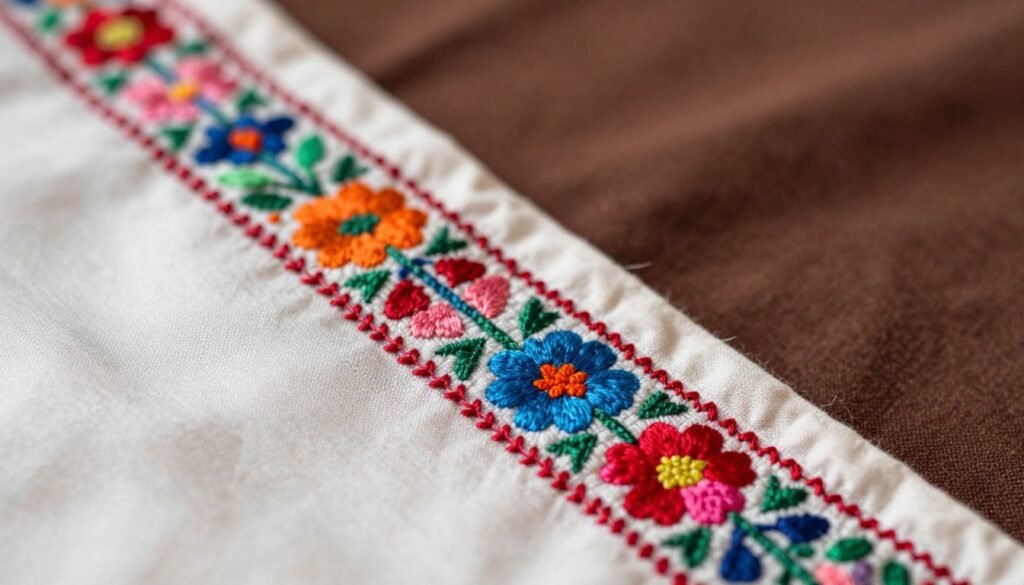
Check stitch consistency and finishing
A crisp close-up is more useful than a full-length image for judging how stitches meet the fabric. It should show a few inches of the embroidered area, including its borders and any joins.
Use this short checklist when comparing product views:
- Inspect stitch spacing across the visible design.
- Examine edges for stray fabric or uneven outlines.
- Look for loose threads on the embroidery.
- Check whether beads, patches, or other pieces sit evenly.
Repeated shapes make uneven spacing easier to spot. In a row of flowers, for example, compare the gap between each motif rather than judging one flower alone.
Also note how the embroidery meets plain fabric. A clean edge should follow the design without obvious gaps, rough patches, or threads sticking out.
Look for secure attachments and clean edges
Beads, mirrors, sequins, and appliqué need firm attachment. A close view can show whether their edges sit flat or lift away from the garment.
A sharp front view does not prove the reverse side is equally neat. Product photos may hide the lining, backing, or thread ends beneath the visible work.
Judge the visible embroidery by its spacing and edges, but do not treat a polished front as proof of neat finishing underneath.
A lifted edge may reflect the angle of the photo, so compare it across several views before deciding. Detail shots taken from different angles can make raised work easier to assess.
Product photos cannot show every part of the garment. If a detail appears loose or uneven in more than one image, ask the retailer to confirm its construction before ordering.
Which Regional Embroidery Style Suits the Look?
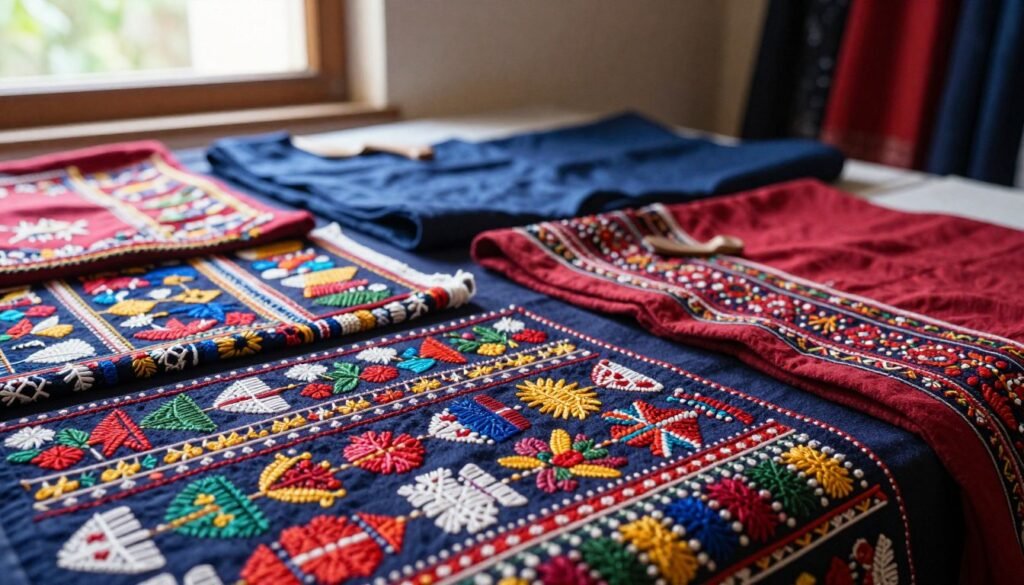
A regional embroidery name gives us a more specific design reference than a broad label such as traditional work. The name can point to a distinct visual style, though it does not tell us everything about the garment.
Use the stitch or visual cue as a style guide, not as proof of a garment’s origin. India’s textile traditions include Gujarati ari, Bengal kantha, Punjab phulkari, and Lucknow chikankari.
| Region | Embroidery name | Recognizable stitch or visual cue |
|---|---|---|
| Gujarat | Gujarati ari | Hook-led chain stitch |
| Bengal | Kantha | Running stitch |
| Punjab | Phulkari | Dense thread embroidery |
| Lucknow | Chikankari | Whitework embroidery |
These names help us picture the kind of surface pattern we might want. Gujarati ari uses a hook-led chain stitch, while kantha relies on running stitches.
Phulkari is known for dense thread embroidery, and chikankari uses whitework. Those cues can help us compare two listings with similar cuts but different surface designs.
A regional name is a useful style clue, not a location guarantee. A product may use a style reference without being made in the region named.
We should also look at the actual photos and description. The size, spacing, and color of a pattern can differ from one garment to another, even when both listings use the same style name.
Match the named style to the look we want, then verify the garment’s own details rather than relying on the style name alone.
What Fabric Is Under the Embellishment, and How Should We Care for It?
A plain cotton kurta and a zari-embroidered Banarasi sari need different care even when both are described as Indian wear. The fabric and decoration together decide which care method is safe.
Dry-clean hand-embroidered garments and embellished silk rather than machine-washing them. In 2026, water can loosen, tarnish, or break delicate threads and attached elements, including zardozi, aari, gota patti, sequins, and beadwork.
Choose cleaning methods by material and decoration
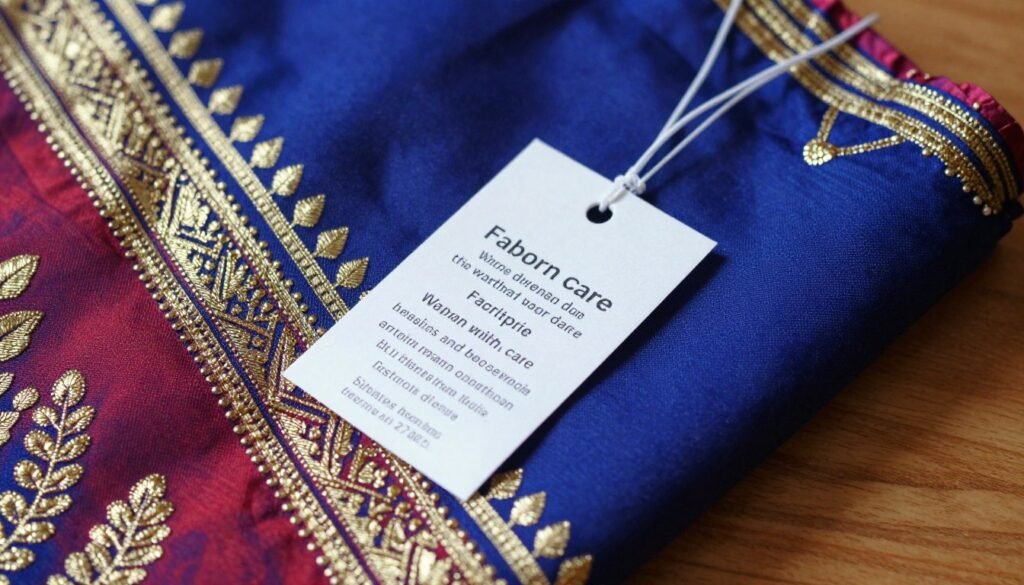
Embroidered Banarasi silk, brocade, and tissue garments need dry cleaning. Water can tarnish, oxidize, or break metallic zari threads in these fabrics.
Garments with zari, sequins, mirrors, or beadwork should also be dry-cleaned instead of machine-washed. A cotton base does not make an embellished garment safe for a wash cycle.
Plain cotton Indian wear can generally go in a machine on a gentle cycle with cold water. Turn it inside out to protect printed designs.
Silk should not go in a washing machine. Agitation can break its fibers and distort the weave, even when the garment has no visible decoration.
Read the product’s care instructions before ordering, especially when the listing names more than one material. A silk blend and a cotton lining may need different handling.
Store embroidered and weighty garments carefully
Breathable cotton or muslin is better for storing embroidered garments than plastic. Plastic can trap moisture and cause fabric to yellow over time.
Heavy lehengas and saris should be folded and stored flat for long-term storage. Their weight can stretch or distort a garment when it hangs for months.
Do not assume that a sturdy-looking lining protects the decorative surface. The beads, metallic threads, and fabric still need care suited to their most delicate part.
These details matter when we decide how often we can wear a piece and how much upkeep it needs. A special-occasion garment may need space for careful flat storage.
When the fabric and embellishment call for different care, follow the more delicate requirement. That rule helps us avoid using a wash method that suits only one part of the outfit.
What Should We Confirm Is Included in the Outfit?
A styled image can show more pieces than the retailer is selling as one outfit. The written listing tells us which outfit components arrive in the parcel.
Confirm each component by name before we compare prices or place an order. A kurta set, lehenga set, and sari are distinct formats, and the listing should state what each product includes.
Use this checklist to compare the product description with the look we plan to wear:
- Main garment
- Blouse or blouse piece
- Dupatta
- Petticoat
- Lining
Some pieces in a photograph may be styling accessories, not items included in the product. A necklace or belt can complete the model’s look without being part of the sale.
Sari listings need a close read. A photo may show a styled blouse, but that blouse may not be part of the listed product.
Blouse and blouse piece do not always describe the same thing. Check whether the listing names a finished blouse, fabric for stitching, or no blouse at all.
The same care applies to a dupatta, petticoat, and lining. A product image may show them, but the written details must confirm their inclusion.
Compare the written inclusions with every component we expect to wear, not only with the photograph. This helps us understand what the parcel contains before checkout.
How Can We Vet a Seller Before Buying Handwork Ethnic Wear Online?
Before entering payment details, confirm that the retailer named on the product page is the same merchant shown at checkout. Consistent identity is a basic sign of seller reliability.
A familiar payment option alone does not establish who will fulfil the order. Indian online checkouts commonly offer UPI, cards, and net banking, but the merchant details still matter.
Check these four points before placing an order:
- Retailer identity matches the name on the product page.
- Contact details stay consistent across the store.
- The checkout names the same merchant.
- Written policies are easy to find and read.
A store may use a separate payment page, but the merchant name should still make sense for the retailer we chose. Watch for a different business name that has no clear link to the store.
Contact information should match across the product page and checkout. A phone number, email address, or service page that changes without explanation can make it harder to resolve an order issue.
Written policies should explain key terms in plain language. We should be able to find how the retailer handles delivery, returns, and customer service before paying.
For buying handwork ethnic wear online, a secure-feeling checkout is not enough by itself. The order should name the retailer we intended to buy from.
Stop if the seller identity changes between the product page, checkout, and payment confirmation.
How Can We Choose the Right Size From an Online Chart?
Start by checking whether the chart measures the body or the finished garment, because those numbers are not interchangeable. A ready-garment measurement refers to the garment itself.
Compare like with like, then use the measurements that match the garment’s cut. A size chart should clearly distinguish body measurements from ready-garment measurements.
| Case | Measurements to compare | Size decision |
|---|---|---|
| General chart | Body or ready-garment measurement | Compare like with like |
| Flared Anarkali or A-line | Bust | Choose from the bust measurement |
| Straight or fitted kurti or co-ord set | Bust and hip | Check both measurements |
| Structured Chanderi between sizes | Chart measurements | Size up |
Meera Plus Size Store states that its chart uses ready-garment measurements and may have a tolerance of 0.5 IN. That tolerance is possible measurement variation, not extra wearing ease.
Ethnic garments are often cut to fixed dimensions and do not stretch like many knit fabrics. A letter size alone cannot tell us whether the garment will fit our shape.
For a flared Anarkali or A-line style, use the bust measurement to choose a size. For a straight or fitted kurti, check both bust and hip measurements.
Co-ord sets also need a check of both bust and hip. If one measurement fits and the other does not, the full set may not sit as intended.
For structured Chanderi styles, size up when our measurements fall between chart sizes. The more structured cut gives less room for a close fit to adjust.
Use the garment’s cut and the measurements that govern that cut, not a letter size by itself.
What Can Product Photos Tell Us About Color and Shape?
A full-length photograph helps us picture the silhouette, but it cannot settle every question about the garment’s color. It can show the overall shape of a sari, lehenga, or kurta set in one view.
Compare full-length and close views instead of relying on one studio image. Lighting and screen settings can change the color we think we see.
A full-length view helps us judge proportion, length, and how the pieces work together. It may show where a dupatta falls or how a lehenga flares when worn.
Close views can reveal how the same fabric and color appear under different lighting. A deep shade may look lighter in a bright studio, while a warmer light can shift its tone.
One common mistake is assuming a single studio image guarantees the delivered garment will look identical on every screen. Phone brightness, display settings, and image light can all affect perceived color.
Look for alternate views of the same item and compare the color across them. A difference between a close view and a full-length image may come from lighting rather than a change in fabric.
Shape can also look different in a posed photograph. A model’s stance, the way a sari is draped, and the spread of a skirt affect the silhouette.
If color is crucial to the outfit, compare more than one image and ask the retailer to clarify any visible variation.
How Can We Check a Handloom Claim?
A handloom claim concerns how fabric is made, which is different from the embroidery added to its surface. Fabric and decoration are separate claims, even when they appear on one garment.
A Handloom Mark label is described as carrying a logo, unique number, and printed security features. The 2025 draft regulation says the label may attach by stitching, tag pin, or another approved method.
Identify the label’s information
When a listing claims that fabric is handloom, check whether the product has the label details named in the draft. Look for the logo, the unique number, and the printed security features.
The draft says a label may be fixed to the product by stitching, a tag pin, or another approved method. The way it attaches may vary, so the label’s details matter too.
A handloom label speaks to the fabric claim. It does not by itself explain whether the surface embroidery was done by hand or machine.
Treat the regulation’s status accurately
The 2025 draft says products marketed, sold, displayed for sale, or promoted as handloom must bear a valid Handloom Mark label. That text is a draft, not a confirmed current rule.
The draft says it would take effect upon publication in the Official Gazette. Its stated condition matters, so we should not treat the draft as already in force.
A product description can use “handloom” and “hand-embroidered” together, but those words describe different features. One concerns how the fabric is made; the other refers to visible surface decoration.
Look at the label information and the product’s own details rather than assuming one claim proves the other. Photos can show embroidery, while a label addresses a fabric claim.
Check the label details and the current status of the rule rather than treating the words handloom and hand-embroidered as interchangeable.
What Return Terms Should We Confirm Before Ordering?
A return window does not guarantee that every garment can be returned or that every charge will be refunded. Product-specific terms can narrow the options.
KALKI’s 2026 terms allow return requests within 15 days of delivery, subject to approval and a successful quality check. Product-page terms may differ.
| Policy point | KALKI’s 2026 term | Practical check |
|---|---|---|
| Return window | Request within 15 days, subject to approval and quality check | Check the product page |
| Exclusions | Listed garment and accessory types, plus customized items | Confirm the exact item |
| Item label | “Non-Returnable” or “Final Sale” means no return, exchange, or refund | Read the label |
| Charges | USD 49 per product for pickup and restocking; alteration charges non-refundable | Calculate possible deductions |
| Shipping and import charges | Shipping and customs duties or tariffs are non-refundable | Review before ordering |
The listed exclusions include bridal wear, accessories, bags, blouses, footwear, and several sari types. They also include customized or personalized products.
KALKI’s 2026 terms exclude sarees with stitched blouses, pre-stitched sarees, and unstitched sarees with fall and pico. Read the exact item terms, since categories can be specific.
Alteration, petticoat, fall-and-pico, and pre-draping charges are non-refundable. The policy also lists a USD 49 reverse-pickup and restocking charge per product.
Shipping fees and customs duties or tariffs are non-refundable for returns or exchanges under the stated policy. The final amount returned may therefore be less than the amount paid.
Save the product-specific terms before checkout so we can compare them with the policy that applies to the order.
How Can We Compare the Full Cost Before Paying?
A lower displayed price may not represent better value if the two outfits include different pieces or services. The amount due gives us a fairer basis for comparison.
Compare like-for-like outfit components and include every stated charge. The amount paid in INR may include the garment price, shipping, customs duties or tariffs, and alterations.
Review these four cost lines before paying:
- Garment price
- Shipping
- Customs duties or tariffs, where applicable
- Alterations or finishing charges
Two sari listings are not directly comparable if one includes a blouse and the other does not. The missing blouse may mean a separate purchase or tailoring cost.
A kurta set with a dupatta also differs from a kurta sold alone. Compare the pieces we will receive, not just the shared garment name.
Judging value from the displayed garment price alone is a common mistake. The final cost can change when shipping, import charges, or alterations appear at checkout.
Compare the amount due in INR against the same garment components and services before choosing between listings.
The displayed amount may not include every charge that applies to an order. Check the total at checkout and note whether any finishing service changes the price.
Keep the cost comparison tied to the same outfit and service needs. A lower starting price may not stay lower once we add a blouse or tailoring.
Conclusion
A confident choice comes from matching the garment’s visible details and written terms to how we plan to wear and care for it. Evidence in the listing matters more than a broad style claim.
We should judge each piece against our fit needs and the care we can give it. A beautiful garment is a better choice when its measurements, materials, and terms suit our plans.
Before checkout, open the chosen listing and review its details once more. Save the chosen product’s specifications and applicable terms before completing the order.