
A comfortable outfit can still feel occasion-ready when your kurta set’s colors, shape, and finishing touches suit your plans. Brunch, work, travel, and celebrations each call for a different balance of ease and polish. Copying a full formal look for a casual daytime plan can feel overdone, even when every piece is lovely. A few practical choices help you feel comfortable while looking right for where you are going. This approach to occasion dressing makes brunch outfit planning and event-ready outfits less about following a formula and more about dressing for the day ahead.
Key Takeaways
- Let the setting and the time of day guide your choices.
- Choose comfort you can maintain for the whole occasion.
- Use color and silhouette to set the outfit’s mood.
- Keep accessories in proportion to the kurta’s details.
- Check your full look before you leave.
Start with the setting and the level of comfort you need, then make each styling choice serve both.
How to Style a Kurta Set Around Your Plans
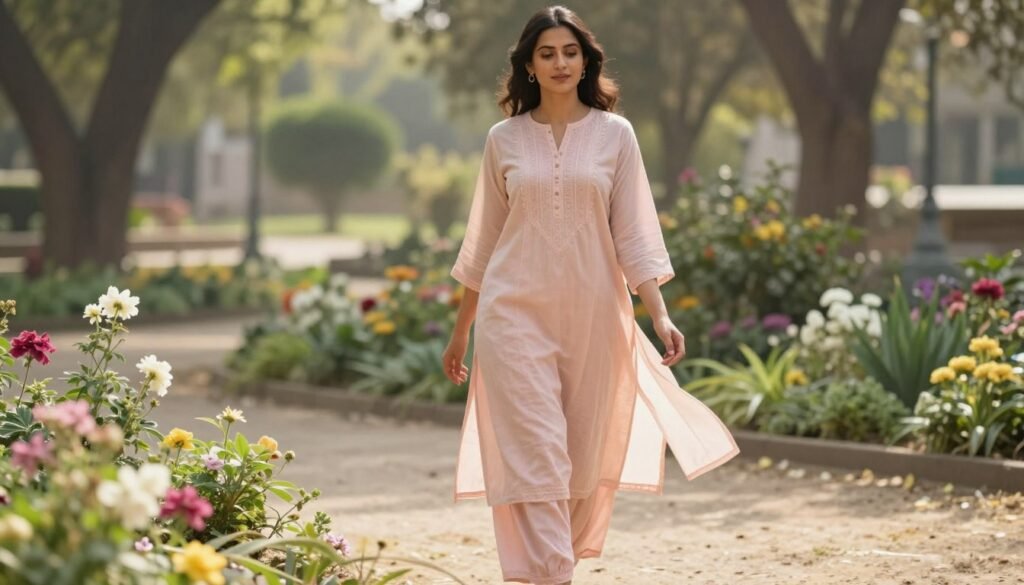
For a comfortable daytime outfit, start with breathable cotton, and save heavier Chanderi for a dressier setting. Comfort comes first when you expect to wear the outfit for hours, while a more formal fabric can add polish when the occasion calls for it.
Choose fabric and shape for the setting and the length of your day. A cotton kurta set feels soft against the skin and suits hot weather. Handloom cotton and linen blends are also breathable summer fabrics, while Chanderi has a dressier, heavier feel than cotton. A kurta set in Chanderi can suit a celebration or a dinner, but a long, hot outdoor plan is a poor match if you have not considered its weight.
Choose fabric for comfort and formality
In 2026, kurta-set trends include breathable cotton, minimal embroidery, and pastel shades with brighter accents. Sage green, soft peach, lavender, dusty rose, and turmeric gold are current color examples, not rules you need to follow. Pastels paired with brighter accents can keep a simple outfit from feeling flat without making it overly formal. A plain cotton style may be the most comfortable choice for errands, while a more textured or embroidered fabric can feel right for a special dinner.
Do not choose a heavier dressy fabric for a hot-weather plan without weighing the comfort trade-off.
Balance the kurta cut with its pants
An A-line kurta gives you a gentle flare, while a straight cut feels cleaner and more streamlined. Straight pants keep the overall shape simple; lightly flared bottoms add movement. An asymmetrical hem can make a familiar cut feel more relaxed or contemporary, especially when the rest of the outfit stays uncomplicated. These shapes can work with different fabrics, so think about how much ease you want when you sit, walk, or travel.
Try the outfit on and move in it before deciding the silhouette works for your plans. Check that you can sit comfortably and that the pants do not restrict your stride. Check that the fabric and silhouette feel comfortable for the full time you expect to wear them.
Which Colors Suit Your Skin Tone?
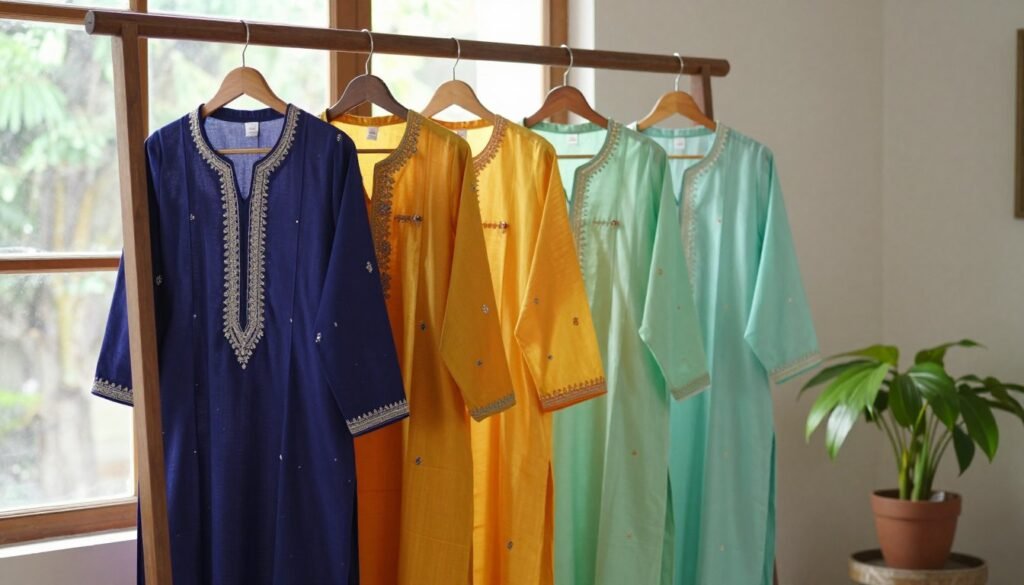
A quick vein check can give you a starting clue: greenish veins suggest warm undertones, while blue or purple veins suggest cool ones. An undertone is the subtle warm, cool, or neutral cast beneath your skin’s surface that can help guide color and metal choices. Use these checks as guides, not strict rules.
Identify your undertone
Look at the veins on your wrist in natural light. Greenish veins are associated with warm undertones, blue or purple veins with cool undertones, and a mix of colors with neutral undertones. You can also notice which metal feels most flattering: a preference for gold often points to warm undertones, silver to cool, and ease with both to neutral. These wrist-vein and jewelry-metal checks are quick clues, not a diagnosis or a limit on what you can wear.
| Undertone | Vein clue | Metal choice |
|---|---|---|
| Warm | Greenish veins | Gold |
| Cool | Blue or purple veins | Silver |
| Neutral | Mix of vein colors | Gold or silver |
Choose colors for your skin tone
Try shades from the options below, then see how they look in daylight. A color’s effect can change with its depth, fabric, and the light around you, so the best choice is the one you enjoy wearing.
- Fair skin: mint, lavender, baby pink, lilac, ivory, navy, or emerald.
- Wheatish skin: mustard, terracotta, warm rust, peach, olive green, or vibrant teal.
- Medium skin: plum, burgundy, fuchsia, royal blue, turquoise, or warm camel.
- Dusky skin: maroon, wine, forest green, burnt orange, cobalt blue, or rich ivory.
- Deep skin: royal blue, emerald green, crimson red, sapphire, or vivid white.
A monochromatic kurta, pants, and dupatta create a continuous visual line. If your kurta is a solid neutral, a contrasting printed dupatta can bring in color without changing the main outfit. Gold jewelry is often recommended with warm undertones, oxidized silver with cool undertones, and rose gold as a neutral option. Still, your preference matters most: try a shade in natural light before choosing it. Use the colors that make you feel at ease, even when they fall outside a suggested palette.
What Works for Brunch and Daytime Plans?
For an easy brunch outfit, pair a breathable cotton kurta set with flat juttis, simple earrings, and light makeup. Keep the mood relaxed with pieces that feel comfortable for sitting, walking, and lingering over coffee. A few restrained details make a daytime look feel considered without turning it formal.
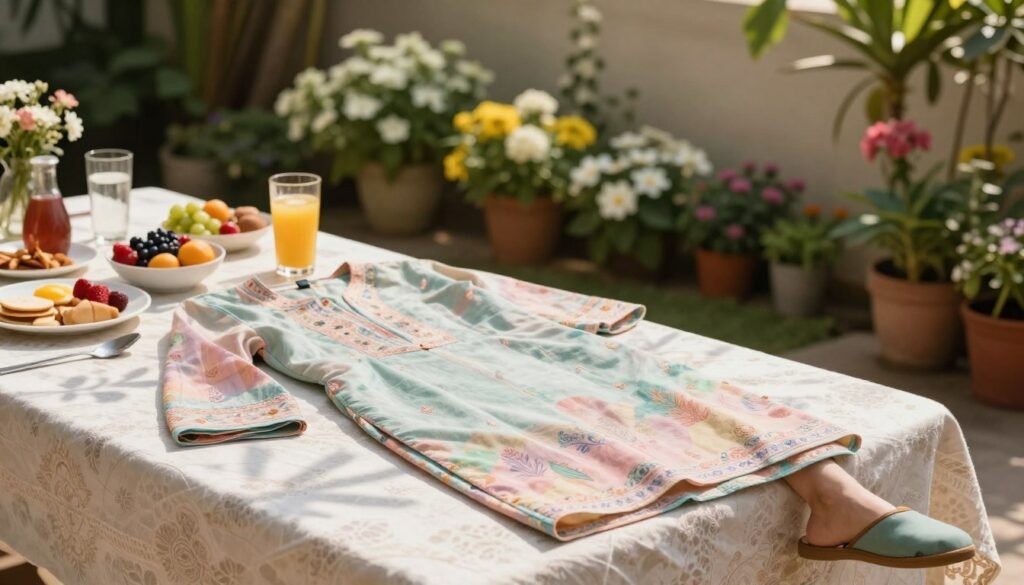
For a solid cotton kurta, small earrings and an easy pair of flats make a simple daytime combination. Juttis add a traditional finish while staying flat and practical. Keep makeup light, with a touch of color or definition rather than a full evening look. If you are meeting friends outdoors, choose accessories that will not need constant adjusting while you move around.
A printed cotton kurta set offers another easy option: wear small studs, a slim kada, and flat juttis for an understated everyday combination. The print already brings visual interest, so you do not need to add several competing details. If the print is especially colorful, choose earrings that echo one of its quieter shades, or keep them neutral and let the pattern stand on its own.
Multiple bold accessories can make a relaxed outfit feel too formal for a casual lunch or daytime visit. One noticeable piece is enough if the print is quiet, but keep the rest simple when the kurta already has a lively pattern. This leaves the outfit comfortable and appropriate without making it look unfinished. Keep one accessory understated if the print already draws attention.
How Can You Make a Kurta Set Office-Ready?
A subtle print, a straight-fit or A-line cut, and minimal jewelry make a dependable base for work. Polished, not fussy is a useful aim when you need an outfit to look composed through meetings, errands, and a full day at your desk. Build the look around four practical choices:
- A subtle print that does not dominate the outfit.
- A straight-fit or A-line silhouette.
- Minimal jewelry, such as pearl studs or hoop studs.
- Practical footwear in a neutral shade.
Keep everyday details subtle
For office wear, small pearl studs, tiny meenakari earrings, or hoop studs add a discreet accent. Keep the rest of your jewelry pared back, especially if the kurta already has embroidery or a noticeable print. A straight-fit kurta is an easy choice for a streamlined look, while an A-line shape gives you a little more movement without losing its neat outline. Choose an outfit you can wear comfortably from your commute through the end of the day.
Add structure with prints and a work bag
A subtle print gives you room to add a small statement piece or a contrasting dupatta. When the kurta has a bold print, understated accessories keep the overall look balanced; stacking several statement accessories can make the outfit feel busy. The print should be the main visual feature, not one of several details competing for attention.
A structured handbag, tote, or laptop-friendly bag makes sense when you need to carry work essentials and keep them organized. Tan, beige, black, brown, and off-white are neutral options that can sit comfortably beside many kurta-set colors. Choose a size that holds what you actually carry, rather than an oversized bag that becomes cumbersome on your commute. A tote may suit a laptop and notebook, while a smaller structured handbag can work when you only need everyday essentials.
Pointed flats, ballerinas, and cushioned mules are practical choices for a workday that includes walking and standing. Comfort matters as much as appearance when you will spend hours on your feet. Choose footwear you can comfortably walk and stand in throughout your workday.
What Makes a Kurta Set Wedding-Ready?
A daytime wedding calls for a different level of shine than an evening celebration, so match the fabric and embellishment to the event. Let the occasion set the tone, rather than treating every gathering as equally formal. Pastel silk or organza suits daytime wedding events, while richer embellishment can feel at home after dark.
Dress for daytime wedding events
Pastel silk or organza can bring a dressy finish to a daytime wedding without the heavier shine of a full evening look. For a mehendi function or a small gathering, mirror-work kurta sets offer festive detail that feels lively and celebratory. A printed kurta set can also be dressed up with a contrasting or solid dupatta, statement earrings, and embellished footwear.
Wedding-season silk with zari or resham embroidery works with straight trousers or a dupatta for a more formal outfit. Keep the amount of embellishment in proportion to the event: an outfit covered in shine may feel excessive at a small daytime gathering, especially when the celebration is informal. Choose a finish that suits the scale and timing of the occasion, not just the fact that it is a wedding.
Add festive detail for evening celebrations
For an evening celebration, statement jewelry, a vibrant dupatta, and embellished juttis can make the outfit feel more festive. Statement jhumkas can be the focal point, so keep the necklace minimal rather than letting two bold pieces compete. One clear focal detail gives the look intention while leaving the kurta’s own work visible.
Optional traditional details include a dainty maang tikka, a small nose ring, or a flower gajra. Choose one that feels natural with your outfit and the event; you do not need to wear all three. If the dupatta is vibrant or the kurta has prominent embroidery, let those details do part of the styling work instead of layering on more ornament.
A wedding guest outfit should feel special without distracting you from the event or making you self-conscious. Try sitting and moving in the full look before you leave, especially if the fabric is delicate or the embellishment is heavy. Choose one focal detail, such as statement jhumkas, and let the remaining accessories support it.
Which Shoes Work With Each Kurta-Pant Shape?
Check where the pants end before choosing a shoe, especially when a long flared hem could cover a heel. The hemline leads: it affects whether your footwear stays visible and whether the pants clear the ground as you walk. For floor-grazing flared pants, choose heels only when the fabric completely covers them.
Match shoes to the hem and volume
A short kurta with bell-bottom pants can take stilettos or pencil heels, particularly when the kurta is embellished. Printed kurtas with gharara pants pair with open-toe wedge sandals, and chunky silver jewelry can complete the look. A layered kurta with flare-leg pants can be worn without a dupatta and styled with block heels. Dhoti-style pants that end just above the ankle work with embroidered ballet flats or Mary Jane shoes; anklets add detail around the exposed hem.
| Pant shape | Footwear | Condition or finishing detail |
|---|---|---|
| Floor-grazing flared pants | Heels | Only when the pants completely cover them |
| Bell-bottom pants | Stilettos or pencil heels | With a short embellished kurta |
| Gharara pants | Open-toe wedge sandals | With chunky silver jewelry |
| Flare-leg pants | Block heels | A layered kurta can be worn without a dupatta |
| Dhoti-style pants ending just above the ankle | Embroidered ballet flats or Mary Jane shoes | Anklets add detail |
Choose footwear for the occasion
Embroidered juttis work with Chanderi cotton and viscose kurta sets, while tan, gold, or oxidized-silver Kolhapuri sandals suit daytime family functions. Block heels in nude, gold, or maroon offer a stable heel option for weddings and parties. Heels under floor-grazing pants work only when the fabric covers them completely; a visible heel can interrupt the clean line of a long hem.
Think about how the full outfit moves, not just how the shoes look while you are standing still. A shoe that catches on the hem can make walking awkward, while a clean hemline keeps the shape intentional. Walk a few steps in the full outfit to make sure the hem clears the ground.
How Should You Choose Jewelry, Bags, and Dupatta Drapes?
Let the kurta’s neckline guide whether you add a necklace or keep the jewelry focused elsewhere. Balance is the goal: a necklace can frame an open neckline, while ornate embroidery may already provide enough detail. A heavily worked yoke needs a minimal choker or no necklace, not another competing focal point.
Balance jewelry with the neckline
Layered necklaces suit a round- or V-neck kurta when the neckline embroidery is understated. A minimal choker is a better fit for a kurta with a heavily worked yoke, where more necklace detail can crowd the embroidery. With printed cotton, a single kada on one wrist and two thin bangles on the other create a layered look without filling every space with jewelry.
If your earrings or necklace already draw attention, keep the wrist details quiet. The idea is not to match every ornament, but to give each one room to show. Check the kurta’s neckline while wearing the jewelry, since a piece that looks balanced laid flat may sit differently once the fabric moves.
Choose a bag and drape for the setting
A dupatta over one shoulder leaves an embroidered kurta yoke visible and keeps the front of the outfit open. For traditional gatherings and poojas, bring both ends forward and pin them near the shoulders. A cape-style drape falls from both shoulders; over a flowing Anarkali set, a loose dupatta with a slim belt can add shape. Choose the drape that feels secure and lets you move naturally.
Match the bag to what you are carrying and where you are going. A potli bag suits weddings and festive kurta sets, while an embroidered clutch works for dinners and receptions. For work, a structured handbag in a muted tone keeps the look practical and composed. Avoid letting a necklace compete with heavy yoke embroidery; the neckline should remain the clearest detail.
Before leaving, raise and lower your arms once to see whether the fabric shifts or catches. If you have pinned the dupatta, make sure the pin is discreet and does not pull on delicate material. Before leaving, check that the dupatta stays secure when you move your arms.
What Should You Wear for Travel and Cooler Weather?
For a travel day, soft cotton and minimal accessories keep the outfit practical without losing its put-together feel. Easy movement matters when you are in transit, carrying a bag, or changing seats. Pack a light extra layer only when the weather or your itinerary calls for it.
Pack a comfortable travel outfit
A soft cotton kurta set is a comfortable travel outfit, especially when you want clothes that feel easy through a long ride or a full day out. Keep accessories minimal so you do not have to manage loose or delicate pieces while packing and moving through transit. Comfortable shoes complete the practical combination, leaving you ready to walk between stops without changing your look.
Use this short packing list to keep the outfit simple:
- A soft cotton kurta set.
- Minimal accessories.
- Comfortable shoes.
- A lightweight stole for cooler evenings.
Set aside your travel clothes before you pack the rest of your bag. That way, the pieces you need first are easy to find, and your outfit does not get buried under items for later in the trip. Choose accessories that can fit into a small pouch so they stay together if you take them off on the way.
Add warmth with a light layer
A lightweight stole can add warmth when the evening turns cool without making your travel outfit feel bulky. In winter, a folded heavier dupatta can wrap around your shoulders like a shawl. The heavier option is useful when the temperature calls for more coverage, but it can be awkward in a packed bag, so bring it only when the weather or itinerary makes it worthwhile.
Keep the extra layer near the top of your bag or in an outside compartment instead of burying it beneath other items. That small choice makes it easier to reach during a cool evening stop or an unexpectedly chilly ride.
Fold your extra layer where you can reach it easily if the temperature drops during the trip.
Conclusion
The easiest outfits to wear are the ones that feel comfortable and suit the moment you are dressing for. Good personal styling does not require every detail to stand out; it asks each choice to support the event and the way you want to feel. One or two finishing touches can make a look feel complete without making it harder to wear.
Before the occasion, try on the full outfit and check it in a mirror. Sit, walk, and lift your arms so you can notice anything that pinches, slips, or feels out of place. Try on your chosen look before the day, then make one small adjustment if anything feels uncomfortable or out of place.